Life Without Buildings
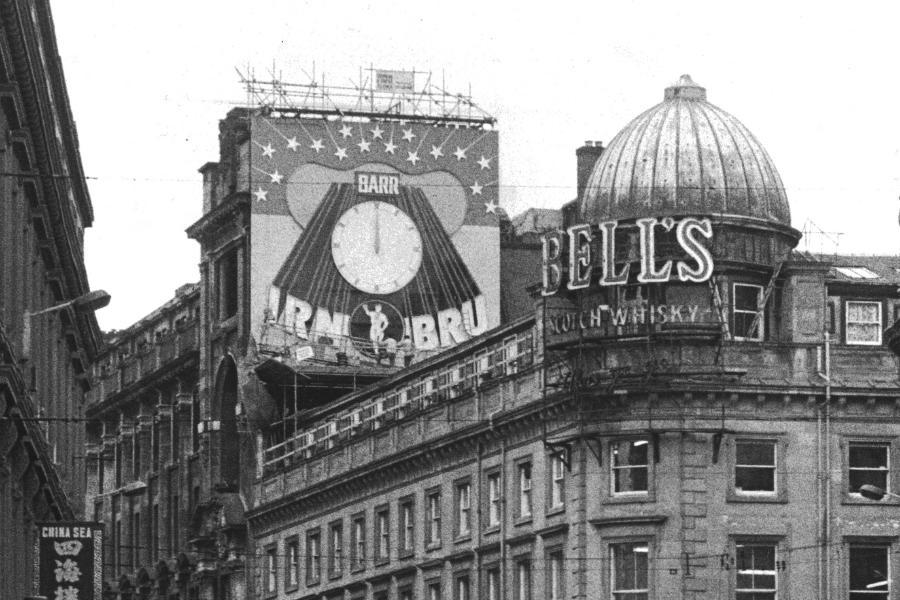
Because the government’s ban on disposable vapes was ineffectual and lacking in foresight, those wasteful lumps of cigarette-substituting plastic have destroyed a corner of old Glasgow. As metaphors go, it’s a bit on the nose.
Burnt buildings don’t tend to be rebuilt here, so the remains will most likely sit under scaffolding and a tarpaulin with a picture of a building on it for several years, until it’s eventually replaced by a uniform and unremarkable construction of cladding and glass. If I was the sort of person who did things I’d start putting up blue plaques that said, “Something better used to be here.”
That’s how it goes at the end of an empire, I suppose. The few good things to have come from oppression and barbarism are lost to carelessness and decline. Wealthy Victorians, for the most part, deserve their statues to be torn down and thrown in the sea, but their concept of a reward-based afterlife and a longing for legacy meant they left us things designed to inspire and intended to last. Terrible men profiting from colonialism, a brutally rigid class system, and the pseudoscience of “seperate spheres” gender ideology they may have been, but they were terrible men striving for a future where life was beautiful and better (even for women, poor people and servants).
The building on the corner of Union and Gordon Street, that some candyfloss flavoured sucking tubes have reduced to rubble and ash, was designed by James Brown (not that one) and built by Carrick & Sons in 1851, with the dome added when it was later redesigned for Forsyth’s department store (the first in the city to be fully lit by electricity).
1851 was also the year of the Great Exhibition in Hyde Park; a celebration of wonders and life to come that included a demonstration of electric lighting, the first pay-to-use flushing toilets, and a precursor to the fax machine.
The Great Exhibition was held in the purpose built Crystal Palace which was then moved to Bromley where it kept some wonky dinosaurs company until it burned down in 1936. The source of the fire was never discovered. John Logie Baird, the agnostic Scottish television pioneer who was broadcasting from the building, believed it might’ve been some gas cylinders he’d had delivered, but most thought it was caused by a cigarette.
The Crystal Palace was never rebuilt and nothing was put in its place, not even some flapping canvas with a drawing of The Crystal Palace on it. And the terrible men who hoped their works would stand long after they’d gone have been replaced by terrible men who wish to live forever in the dust of everything their greed and arrogance destroyed. Vision has given in to vapidity. There is now nothing where something used to be.